Sunday, 15 May 2011

Guru Gobind Singh Ji By Bhai Nand lal Ji

The Almighty Awe-Inspiring Enlightener God is Eternally True.

105.
The Helper, The Victorious Guru Gobind Singh.
Approved by the Almighty: Guru Gobind Singh.

106.
Custodian of the Truth: Guru Gobind Singh.
Blessed with all Divinity: Guru Gobind Singh.

107.

God-Conscious is Guru Gobind Singh.
Emperor of Emperors is Guru Gobind Singh.

108.
Master of Both Worlds: Guru Gobind Singh.
Destroyer of Oppressors: Guru Gobind Singh.

109.
Illuminates Life with Abundance: Guru Gobind Singh.
Reveals Mysteries of God: Guru Gobind Singh.

110.
Wise to the Secrets of the World: Guru Gobind Singh.
Showers Unlimited Mercy: Guru Gobind Singh.

111.

Beloved by God: Guru Gobind Singh.
Connected & United with God: Guru Gobind Singh.

112.

This World's Life Giving Light: Guru Gobind Singh.
The Sea of God's Blessings: Guru Gobind Singh.

113.
Beloved of God: Guru Gobind Singh.
Seeker & the Sought: Guru Gobind Singh.

114.
Victorious Sword-Bearer: Guru Gobind Singh.
Knower of Every Heart: Guru Gobind Singh.

115.

Wears the Crown of the World, Guru Gobind Singh,
but Lives in Humility like the Shadow of God. Guru Gobind Singh!

116.

Treasure of Treasures: Guru Gobind Singh.
Medicine of all Ailments: Guru Gobind Singh.

117.
Arbitrator of Society: Guru Gobind Singh.
Shelter of Both Worlds: Guru Gobind Singh.

118.

Praised by God Himself: Guru Gobind Singh.
Blessed with the Highest Qualities: Guru Gobind Singh.

119.
The Greatest People Bow Down at His Feet: Guru Gobind Singh.
The Angels Visit Him for Audience: Guru Gobind Singh.

120.

Fortunate Ones Admire Guru Gobind Singh.
Knower of the Path of Our Hearts: Guru Gobind Singh.

121.
Those Without a Spiritual Home Kiss the Feet of Guru Gobind Singh.
Both Worlds Beat the Drum of His Authority: Guru Gobind Singh.

122.
Ruler of the Three Worlds: Guru Gobind Singh.
Authority of the Four Vedas: Guru Gobind Singh.

123.
The Six Shastras are His Servants: Guru Gobind Singh.
He always Defeats Tyrants, Guru Gobind Singh.

124.
Completely Pure, Free from Ill-Will: Guru Gobind Singh.
The Mirror Through Which God is Revealed: Guru Gobind Singh.

125.
Meditates on God: Guru Gobind Singh.
Both a Mystic & a King: Guru Gobind Singh.

126.
Virtue Personified: Guru Gobind Singh.
Limitless Beneficience: Guru Gobind Singh.

127.
Genorous Beyond Genorosity: Guru Gobind Singh.
Forgiving Beyond Forgiveness: Guru Gobind Singh.

128.
Wealth Beyond Wealth: Guru Gobind Singh.
Giver Beyond Giving: Guru Gobind Singh.

129.
Unmoving & Eternal: Guru Gobind Singh.
Auspicious & Blissful: Guru Gobind Singh.

130.
The Essence of God's Glorious Blessings: Guru Gobind Singh.
Radiance of God's Light: Guru Gobind Singh.

131.
Hearing the Name of Guru Gobind Singh,
Vision of God is the Reward. Guru Gobind Singh!

132.
Singing the Praises of Guru Gobind Singh,
Gives Blessing of God's Union. Guru Gobind Singh!

133.
Writing the Attributes of Guru Gobind Singh,
One Becomes Renowned, by the Grace of Guru Gobind Singh.

134.
Seeing the Face of Guru Gobind Singh,
One walks in His Path, Intoxicated with God's Name. Guru Gobind Singh!

135.
Those who Kissed the Dust Under the Feet of Guru Gobind Singh,
Were Fortunate and Elevated in Life. Guru Gobind Singh!

136.
The Ability to Accomplish All Deeds is with Guru Gobind Singh.
The Friend of the Forlorn is Guru Gobind Singh.

137.
He is a Worshipper of Only God, and the Whole World Bows before Him: Guru Gobind Singh.
He is Generous with All His Blessings: Guru Gobind Singh.

138.
The Chief of All Crowns: Guru Gobind Singh.
Occupying the Loftiest Position: Guru Gobind Singh.

139.
The Ten (Greek) gods are Under the Power of Guru Gobind Singh.
They Sing Praises in Reverence of Guru Gobind Singh.

140.
The Sacred Goddesses Work for Guru Gobind Singh.
They are Also Servants of Guru Gobind Singh.

141.
The Authority of Our Destiny: Guru Gobind Singh,
He Submits to God in Meditation: Guru Gobind Singh.

142.
The Nine Sublime gods are the dust of the feet of Guru Gobind Singh.
They are quick to serve Guru Gobind Singh.

143.
Above the Highest Thrones is Guru Gobind singh.
Travelling in Omnipresence: Guru Gobind Singh.

144.
Supreme in all Virtues: Guru Gobind Singh.
The Uppermost Eternal: Guru Gobind Singh.

145.
Giver of Light to the World: Guru Gobind Singh.
Our Hearts and Souls Blossom Because of Guru Gobind Singh.

146.
Perpetually Increasing in Stature: Guru Gobind Singh.
The Beauty of Every Throne: Guru Gobind Singh.

147.
The Guide of Both Worlds: Guru Gobind Singh.
The Sight of Every Eye: Guru Gobind Singh.

148.
The Commander of the World: Guru Gobind Singh.
Supreme in Stature: Guru Gobind Singh.

149.
Both Worlds are the Army of Guru Gobind Singh.
Both Worlds are Under the Protection of Guru Gobind Singh.

150.
The Giver Beyond Givers: Guru Gobind Singh.
The Conqueror of Every Battle: Guru Gobind Singh.

151.
Containing All Virtues is Guru Gobind Singh.
Perfect in Character is Guru Gobind Singh.

152.
The Soul of Every Body: Guru Gobind Singh.
The Light of Every Eye: Guru Gobind Singh.

153.
The Provider of the World's Sustenance: Guru Gobind Singh.
He Showers God's Blessings. Guru Gobind Singh!

154.
The 27 Gods are Beggers of Guru Gobind Singh.
They are Sweepers of the House of Guru Gobind Singh.

155.
The Five Elements of Earth Praise Guru Gobind Singh.
The Seven Worlds are Madly in Love with Guru Gobind Singh.

156.
Both Worlds are Under the Hand of Guru Gobind Singh.
All the Angels are Inferior to Guru Gobind Singh.

157.
Nand Lal, Slave Dog of Guru Gobind Singh,
Carries the Stamp of Guru Gobind Singh.

158.
Lower Than the Dogs of Guru Gobind Singh,
Eating the Left-Overs at the Dinner Table of Guru Gobind Singh.

159.
Nand Lal Begs for the Gift, from Guru Gobind Singh,
of the Dust of the Feet of Guru Gobind Singh.

160.
Nand Lal Sacrifices His Life in an Instant to Guru Gobind Singh.
Nand Lal's Head Shall Remain at the Feet of Guru Gobind Singh.

Don't loose your good virtues

This Shabad is by Guru Raam Daas Ji in Raag Bairaaree on Pannaa 719


bYrwVI mhlw 4 ]

hir jnu rwm nwm gun gwvY ]

jy koeI inMd kry hir jn kI Apunw gunu n gvwvY ]1] rhwau ]

jo ikCu kry su Awpy suAwmI hir Awpy kwr kmwvY ]

hir Awpy hI miq dyvY suAwmI hir Awpy boil bulwvY ]1]

hir Awpy pMc qqu ibsQwrw ivic DwqU pMc Awip pwvY ]

jn nwnk siqguru myly Awpy hir Awpy Jgru cukwvY ]2]3]

Bairaaree, Fourth Mehla:

The Lord's humble servant sings the Glorious Praises of the Lord's Name.

Even if someone slanders the Lord's humble servant, he does not give up his own goodness. ||1||Pause||

Whatever the Lord and Master does, He does by Himself; the Lord Himself does the deeds.

The Lord and Master Himself imparts understanding; the Lord Himself inspires us to speak. ||1||

The Lord Himself directs the evolution of the world of the five elements; He Himself infuses the five senses into it.

O servant Nanak, the Lord Himself unites us with the True Guru; He Himself resolves the conflicts. ||2||3||

Guru Sahib pre-warns us that we will encounter someone who will do ninda or chugli, etc. When we face that we should not lose all the good virtues we have attained with the blessings of Guru Maharaj and exchange them for the negative vikaars.

Unfortunately the world is engrossed in vikaars, that is why we live in kalyug. Rather than enjoying the blessings of Guru Ji, they engross themselves in these vikaars. Often this becomes a cycle of vikaars, where one incites another and they both get more angry.

Guru ji requests to maintain our Gursikhi, our humility and our focus on the positive path we follow. Many of you will know of Bhai Rama Singh ji. I was fortunate to spend any years in the sangat of Bhai sahib. When Bhai Sahib became the Jathedar of Akhand Kirtani Jatha UK, the leader of another sikh organisation in UK wrote article against Bhai sahib in which he stated Bhai sahib was a “low caste hindu indian government agent.” This upset alot of sangata all over UK and Europe.Then the mention of caste is something that no sikh should ever reduce himself to.

Bhai Sahib was from a hindu background, but was a true Khalsa, and one of the most Panthic people that I had ever met. He had left everything for sikhi, and dedicated himself for the Panth. In the eight years since I kept my kesh, I have heard many people talk of Panth, and only a handful actually do something for the Panth. Bhai Sahib did something.

A few days later I was at a rainsbhai where I met Bhai Sahib. I said to Bhai sahib, I think a response should be written by the youth. He put his hand on my shoulder and said,"leave it, it is irrelevant. Do not let anyone distract you from the seva for the Panth". He said, "At the times of Guru Nanak, so many people put Guru ji down, swore at him, and were jealous of him. But it is Guru Nanak who is remembered everywhere today. All them gallan are forgotten. "

Bhai sahib was right, sometimes we are so easily distracted from our seva. People are always going to say things. But they are irrelevant. Seva is a blessing, and one should focus on that. I remember sitting there thinking, how some people must have such "bad karams", that they could of had darshan of Sahib Siri Guru Nanak dev ji. For they lived when he walked with his darshan on this earth. Yet they slandered him, and were jealous of him. In the same way, whoever wrote that article, probably never met bhai sahib, but chose to slander him. We should not be incensed, but realise not do sanjh (share) these bad karams and vikaars. We should appreciate all the goodness and Gursikhi around us.

Later I learned that many Gursikhs from their own jathebandi that the article writer led, admonished him out of their respect for Bhai Rama Singh ji.


Bhai sahib was above praise and slander, both were irrelevant to him. He had attained Sehaj, which is one the most difficult stages to attain. Can anyone ever remember Bhai sahib raising his voice, or doing anything negative. He always had a smile, filled with contentment. It is his pyar, grace, affection, humility, virtues which are ever-present on the stage on Sehaj. He loved everyone, and did no difference with anyone. Such is the value of a Jeevan, and these were the virtues of Sahib Siri Guru Nanak Dev ji, and Bhai sahib was his sewak.

In the same way, we have so many youth learning and experiencing Gursikhi, it is important that all focus on doing more positive seva and not let ourselves be distracted by vikaars of others. In time people only remember the positive seva, and hopefully more people locally will build jeevans like Bhai Rama singh ji.

Waheguru ji kekhalsa, waheguru ji ke fateh


- taken from an e-mail

Sunday, 1 May 2011

Which Voting System Is the best?

by Tony Crilly


With the day of the referendum on the UK voting system drawing nearer, Tony Crilly uses a toy example to compare the first past the post, AV and Condorcet voting systems, and revisits a famous mathematical theorem which shows that there is nothing obvious about voting.

Choosing the winner

How to choose a winner?

The good folk of Chuddlehampton have to elect their village councillor, the person to represent them at the Regional Council. "Go and elect someone" was the only instruction they were given. So how were they to go about it?

The village elders supervising the vote soon found there were many ways this could be done. It was bewildering, but they had to find a suitable way to do this. There were three candidates, A, B, C, shorthand for Squire Allsworthy, Madame Bosanquet, and Farmer Charles. The elders wanted to avoid such crude methods as drawing straws. That might have sufficed in years gone by, but modern Chuddlehamptoners wanted to show the world that they were a sophisticated lot.

It seemed there were three main methods available:

  • The first-past-the-post (FPTP) method
  • The alternative vote (AV) method
  • The Condorcet method.

Having studied the matter, the elders could not decide which one to choose. In the end they decided to hold the village vote and decide afterwards. If things went well perhaps all methods would deliver the same result, and a choice would prove unnecessary.

So the electorate of twenty villagers assembled at the voting station and filled out their voting slips. The village clerk explained that each should list the candidates in order of preference, in what he called a voter profile. So a voter profile CAB meant that voter had put down C as first preference, A as second preference and B as third preference.

Corresponding to the twenty voters in the village there were twenty profiles. When the clerk gathered them in, ready for the count, he noticed a pattern. This did not surprise him unduly as Chuddlehamptoners tended to be a clannish bunch.

There were 4 voter profiles of the type ABC, 6 profiles BAC, 6 profiles CAB, 2 profiles CBA and idiosyncratic voters who returned profiles ACB and BCA. This made twenty and to the credit of Chuddlehampton there were no spoilt votes. In a table the results were:

No of votersProfiles
4ABC
6BAC
6CAB
2CBA
1ACB
1BCA
20

We'll see how the candidates fared under each of the systems:

The FPTP method

Looking only at first preferences, as you are only allowed to do in the FPTP method, the clerk counted 8 votes for C, 7 votes for B, and 5 votes for A.

Farmer Charles gained the most votes so should be elected.

The AV method

Although Farmer Charles obtained 8 first preference votes (40% of the vote) he failed to get 50% which is required for a win under the AV system. As Squire Allsworthy got the fewest first preference votes (25%) he is dropped off the list and the vote goes into a next round of counting, with a run-off between Madame Bosanquet and Farmer Charles. In this round the second preferences for the voters who gave Squire Allsworthy their first preference are counted. So, as he is no longer on the list and cannot be elected himself, his voters' second preferences will count in the run-off.

The voters giving Squire Allsworthy the first preference gave the 4 profiles ABC and the single profile ACB. So there are 4 second preferences to be awarded to B and one to C. Added to the first preferences, candidate B has 7 + 4 = 11 votes, and C has 8 + 1 = 9 votes.

So Madame Bosanquet would be elected.

The Condorcet method

This method is perhaps lesser known, but it is one which is quite transparent and fair.

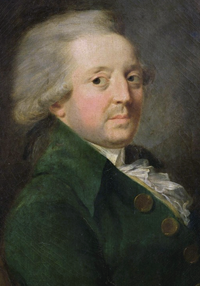
Marquis de Condorcet (1743-­‐1794)

Marquis de Condorcet (1743-1794)

The Marquis de Condorcet was a key player in the examination of voting systems when the French Revolution was in full flood. He was an eminent mathematician of the time who corresponded with the likes of Leonhard Euler on mathematics. In his later years, before he met his death mysteriously in a prison near Paris, he applied mathematics to social situations, like juries and voting systems.

Condorcet's method takes in the fine detail of the voter profiles by examining preferences between pairs of candidates. So, for example, the voter profile CAB expresses a preference for C over A, A over B, and C over B. These are coded CA, AB, and CB. Other voters may prefer pairs in the reverse orders AC, BA, BC. There are altogether six pairs to consider.

By analysing all the profiles, pitting each candidate against the other two, the clerk found that the electorate of Chuddlehampton preferred A to B (11 votes have preference AB and only 9 have preference BA), A to C (again by 11 votes to 9), and B to C (again 11 to 9).

As the electorate prefers A to both B and C, Squire Allsworthy is deemed the winner.

So the three schemes, FPTP (Farmer Charles), AV (Madame Bosanquet), and Condorcet's method (Squire Allsworthy), give three different winners.

There are drawbacks to each of these systems. Under FPTP, Farmer Charles was elected with 8 votes but 12 voters did not support him with their first preferences. Under AV, Madame Bosanquet won the election but relied on the second preferences of those who voted for candidate A as their first preference. This result upturned the first preference vote which by a majority of first preference votes placed C above B. A potential problem with the Condorcet method is that the vote may be inconclusive. It is quite possible to arrive at the result of an election such as AB, BC, CA where no one candidate is preferred over the others (this is known as the Condorcet paradox).

So there are weaknesses with each of the three voting systems, underlining the fact that there is nothing obvious about voting systems.

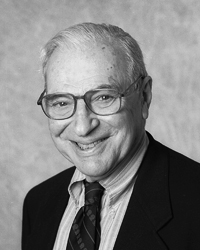
Kenneth Arrow

Kenneth Arrow (b.1921). Image: Linda A. Cicero / Stanford News Service.

When voting systems come under discussion, mathematicians think of Kenneth Arrow's landmark theorem proved in the 1950s. In recognition of his work Arrow was awarded a Nobel Prize for Economics in 1972.

A voting system is a way of translating the individual voters' preferences into preferences for the whole constituency. Arrow set up a list of requirements thought desirable for a voting system in general, and the type of voting which should take place. Like the folk of Chuddlehampton each voter in an Arrow system records a preference by ranking all the candidates in the election. The result of the election is a ranking of the candidates based on the preferences of all the voters.

Next Arrow assumed some mathematical properties of his system. He stipulated that a difficulty found in Condorcet's method should not be allowed to happen for his abstract system: in his ideal system he could not allow AB, BC, CA as the result of an election, for it was no result at all. It says that A is preferred to B, B to C, and C to A, going around in a circle. This contradicts the transitive law that AB and BC always implies AC.

In much of mainstream mathematics the transitive law is obeyed. For example, in the set of the integers with the greater than relation we have that a > b and b > c always implies that a > c. It needs to be stated afresh for voting systems, for transitivity is not obviously the case for some human relations - in the relation "is a friend of" does it automatically follow from a is a friend of b, and b is a friend of c, that a is a friend of c?

Arrow also makes the assumption that the removal of one candidate does not alter the preferences of other candidates, as occurred in the AV result at Chuddlehampton. But he would not like FPTP either, because in this system voters only mark their first preference. There are several other modest properties that Arrow assumes of his general voting system. Of course it must have the transitive property (thus making the system "rational"). Summing up,

  • There should be no single voter who could force the result of the election (dictator condition).
  • If every voter puts Candidate X above Y in their voter profiles, the result of the election should do the same (unanimity condition).
  • The result of an election placing X above Y is unaffected by the ranking of some other individual (independence from irrelevant alternatives).

So Arrow set up an abstract system with a set of axioms, much like we might set up the definition of an object in abstract algebra.

Arrow's theorem states that no voting system can conform to all the axioms. By deduction Arrow proved a contradiction to one of the axioms must be found. Put another way, whatever voting system is chosen, one of the axioms must be violated. It is an impossibility theorem.

Arrow's theorem is one of those negative results beloved by mathematicians (like there being no integer solution to Fermat's equation for cube powers or higher, or the impossibility of constructing a square with the same area as a given circle using only a ruler and compass). It sets limits on what is possible for voting systems.

Strictly speaking, Arrow's theorem only applies to voting systems in which each voter ranks all the candidates. In the FPTP system voters place an X against their first preference and to no other, so Arrow's theorem says nothing about it (like Pythagoras' theorem which makes a statement about right angled triangles but not about other triangles). In the AV system as it is intended to be used in UK elections, voters place candidates in a preferred order but they are under no obligation to rank them all. Arrow's theorem does not apply to this version of AV either.

But this doesn't make the theorem irrelevant. Arrow's approach highlights the potential tension between the fundamental assumptions an ideal voting system should satisfy. It allows us to explore how they might be modified to give acceptable voting systems and to explore the theoretical nature of these systems. Condorcet and Arrow show us that voting systems are more complex that we might think, and they have shown us how to analyse voting systems in a mathematical way.

You can read more about the mathematics of voting, including more about Arrow's theorem, in these Plus articles.

Sunday, 16 January 2011

Wise words by Leo Buscaglia

“Too often we underestimate the power of a touch, a smile, a kind word, a listening ear, an honest compliment, or the smallest act of caring, all of which have the potential to turn a life around.”

If someone is not well or is in hospital, what should we do?

If someone is not well or is in hospital, what should we do?

Should we go see them and if so what do we accomplish by doing this?

Is is to make ourselves feel better....
Is it so we can say 'well if something does turn for the worst then at least I saw them.' ....
Is it to make them feel wanted and happy for that short period of time? ...
Is it to show how much we care? ...

Maybe, but does this really help that person get better? How can we help long term and not just be there for the day or that short period of time? How can we show our love and concern for that persons well being each and everyday?

Its amazing how when we have questions, maharaj(god) answers them. See the hukamnama below.

This Shabad is by Guru Arjan Dev Ji in Raag Sorath on Pannaa 623

soriT mhlw 5 ]
sorat(h) mehalaa 5 ||
Sorat'h, Fifth Mehla:

guir pUrY crnI lwieAw ]
gur poorai charanee laaeiaa ||
The Perfect Guru has attached me to His feet.

hir sMig shweI pwieAw ]
har sa(n)g sehaaee paaeiaa ||
I have obtained the Lord as my companion, my support, my best friend.

jh jweIAY qhw suhyly ]
jeh jaaeeai thehaa suhaelae ||
Wherever I go, I am happy there.

kir ikrpw pRiB myly ]1]
kar kirapaa prabh maelae ||1||
By His Kind Mercy, God united me with Himself. ||1||

hir gux gwvhu sdw suBweI ]
har gun gaavahu sadhaa subhaaee ||
So sing forever the Glorious Praises of the Lord with loving devotion.

mn icMdy sgly Pl pwvhu jIA kY sMig shweI ]1] rhwau ]
man chi(n)dhae sagalae fal paavahu jeea kai sa(n)g sehaaee ||1|| rehaao ||
You shall obtain all the fruits of your mind's desires, and the Lord shall become the companion and the support of your soul. ||1||Pause||

nwrwiex pRwx ADwrw ]
naaraaein praan adhhaaraa ||
The Lord is the support of the breath of life.

hm sMq jnW rynwrw ]
ham sa(n)th janaa(n) raenaaraa ||
I am the dust of the feet of the Holy people.

piqq punIq kir lIny ]
pathith puneeth kar leenae ||
I am a sinner, but the Lord made me pure.

kir ikrpw hir jsu dIny ]2]
kar kirapaa har jas dheenae ||2||
By His Kind Mercy, the Lord blessed me with His Praises. ||2||

pwrbRhmu kry pRiqpwlw ]
paarabreham karae prathipaalaa ||
The Supreme Lord God cherishes and nurtures me.

sd jIA sMig rKvwlw ]
sadh jeea sa(n)g rakhavaalaa ||
He is always with me, the Protector of my soul.

hir idnu rYin kIrqnu gweIAY ]
har dhin rain keerathan gaaeeai ||
Singing the Kirtan of the Lord's Praises day and night,

bhuiV n jonI pweIAY ]3]
bahurr n jonee paaeeai ||3||
I shall not be consigned to reincarnation again. ||3||

ijsu dyvY purKu ibDwqw ]
jis dhaevai purakh bidhhaathaa ||
One who is blessed by the Primal Lord, the Architect of Destiny,

hir rsu iqn hI jwqw ]
har ras thin hee jaathaa ||
realizes the subtle essence of the Lord.

jmkMkru nyiV n AwieAw ]
jamaka(n)kar naerr n aaeiaa ||
The Messenger of Death does not come near him.

suKu nwnk srxI pwieAw ]4]9]59]
sukh naanak saranee paaeiaa ||4||9||59||
In the Lord's Sanctuary, Nanak has found peace. ||4||9||59||


Maharaj here tells us the answer. How do we help that person? - we help by doing our ardas. But not an ardas that says maharaj please help that person get better ... no it should be an ardas that asks maharaj to help that person come into a gursikhi jeevan(life) and attached him/herself to maharaj's feet. It should be an ardas to ask maharaj to show us how to love him and how to give our whole mind, body and soul to him. If we do this (give our mind, body and soul to maharaj), then maharaj will look after us and become our protector and then we may become ill but we will feel no pain because we have maharaj on our side.

Maharaj, at the end of the day, is the only one who can really help and who can really get someone better.

Waheguru !!!!!